Debunking the Drama: Why the Overturned Wide Call in India's Thriller Against Japan Was Lawfully Correct
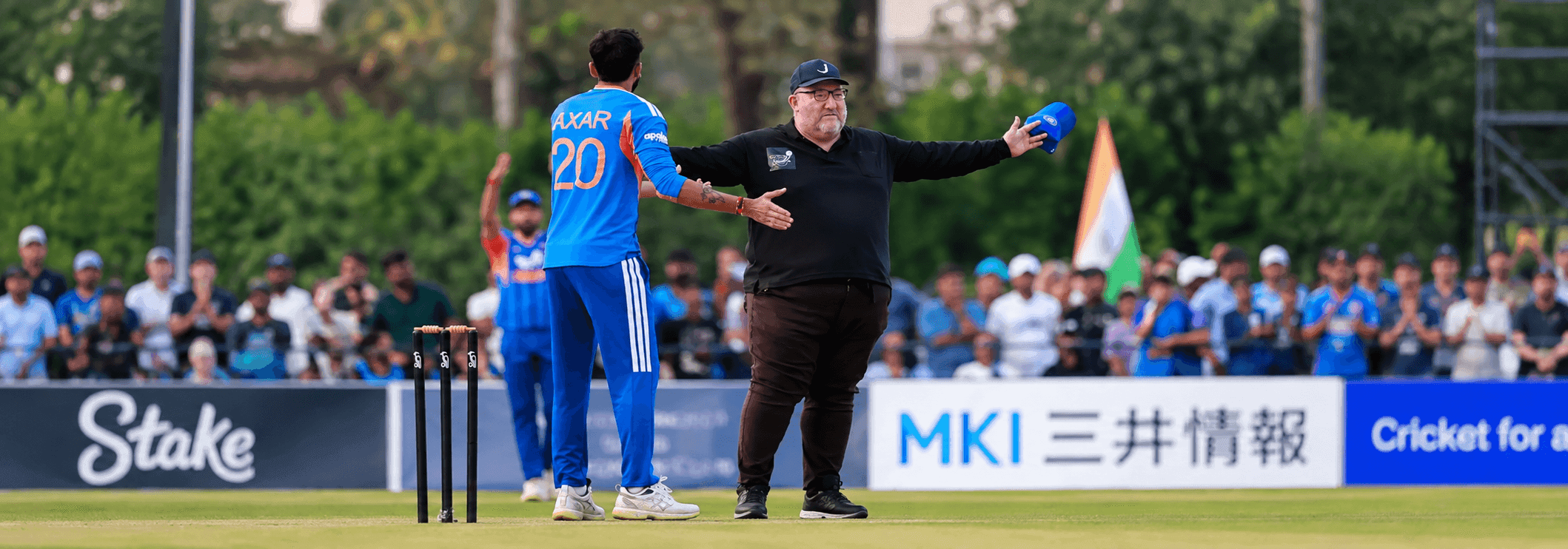
A historic cricketing contest that finished on a knife-edge was quickly followed by an explosion of online debate. During the frantic final over of India's nail-biting two-run victory over Japan at the Sano International Cricket Ground on Tuesday, a reversed wide call by the on-field match officials emerged as the primary flashpoint. While critics on social media were quick to cry foul and claim that the world champions pressured the officials, a closer look at the Marylebone Cricket Club (MCC) Laws of Cricket and International Cricket Council (ICC) playing conditions confirms that the umpires made the correct call.
DailyCricInfo breaks down the exact playing conditions, expert analysis, and why the controversy surrounding the decision is unfounded.
The Flashpoint: What Happened in the Final Over at Sano?
Chasing a modest target of 33 in a rain-reduced five-over shootout, Japan entered the final over needing eight runs with three wickets down.
Left-arm spinner Axar Patel was tasked with bowling the decisive over. After a dot ball and a single, left-handed batter Alexander Shirai-Patmore attempted a reverse sweep and missed, with the ball passing down the leg side. Bowler's end umpire Chris Thurgate initially called a wide, reducing the equation to six required from four balls.
When the exact sequence was repeated on the very next delivery, Thurgate signaled another wide. That prompted immediate reactions from Axar, wicketkeeper Sanju Samson, and Indian captain Shreyas Iyer, who approached square-leg umpire Chris Brown, a member of the ICC Elite Panel.
Following a brief mid-pitch conference between Brown and Thurgate, the second wide signal was promptly rescinded. The dot ball stood, returning the equation to seven runs needed from three deliveries. Axar kept his nerve across the final three balls to restrict Japan to 30 for 3, sealing an escape by two runs.
What the Laws Say: The Switch-Hit and Reverse-Sweep Rule
The primary point of confusion stemmed from how wide deliveries are adjudicated when a batter alters their stance.
Former ICC international panel umpire Anil Chaudhary cleared the air regarding the incident, emphasizing that under standard ICC playing conditions, attempting a reverse sweep or a switch hit nullifies the strict leg-side wide rule.
Under ICC regulations and the ICC Almanac guidelines:
- Once a batter attempts either a reverse sweep or switch hit, both sides of the wicket are treated as the off side.
- It does not matter when the batter changes their stance, even if the switch occurs after the bowler has released the ball, or if the batter only feigns the action.
- In such scenarios, the lenient off-side wide guideline applies to both sides of the stumps. A delivery must pass at least 75 centimetres outside the outer stump to be deemed a wide.
While the first wide delivery in the over strayed beyond that 75-centimetre threshold, the second delivery passed well inside it. Because Shirai-Patmore had initiated a reverse sweep, the ball was within legitimate striking reach under the modified guideline, making it a legal delivery.
Did the Umpires Have the Authority to Overturn the Call?
Yes, without question.
Allegations that India "bullied" the officials overlook the fundamental authority granted to match umpires under MCC Law 2.12. The law explicitly states that an umpire may alter any decision provided the correction is made promptly and before the ball becomes dead or the next delivery is bowled. Furthermore, umpires are fully permitted to consult one another whenever clarification is required.
With no Decision Review System (DRS) or television umpire available at the venue, on-field communication between Chris Thurgate and the experienced Chris Brown ensured that the accurate playing condition was applied.
Allowing an initial error to stand does not obligate match officials to repeat the mistake. By consulting and enforcing the correct interpretation before the third ball was bowled, the umpires prioritized accuracy under the laws of the game.
While Japan deserve immense credit for taking the world champions to the final delivery in Sano, the resolution of the final over was entirely grounded in the rulebook.
For verified rule breakdowns, expert analysis, and comprehensive coverage of international cricket, stay tuned to DailyCricInfo.
Written by
Team DailyCricinfo
Cricket correspondent at Daily Cric Info.