India’s 460 for 9 Puts Sri Lanka Under Pressure as Rain Becomes the Biggest Threat in Galle
For DailyCricInfo, the first Test between India and Sri Lanka has already produced the kind of batting performance India were looking for, but after two rain-hit days in Galle, the biggest question is no longer how many runs India can score. It is whether they have enough time left to turn their commanding position into a result.
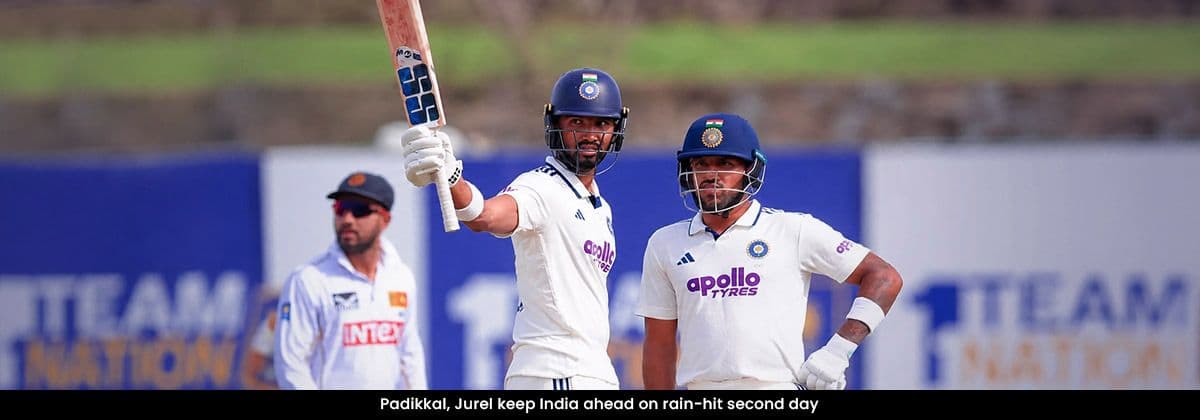
India finished the second day on 460 for 9, with Devdutt Padikkal's superb 167 at the centre of a dominant batting display. Padikkal, playing only his third Test and coming into the side after Sai Sudharsan's injury, grabbed his opportunity with both hands. His maiden Test century grew into a career-best score, and by the time Sri Lanka finally found a way through the Indian batting, the left-hander had already done most of the damage.
The innings had not begun under ideal circumstances. Rain had already interrupted the opening day, allowing only 73 overs, but India made the most of the cricket they got. KL Rahul and Padikkal settled the innings after Yashasvi Jaiswal's early dismissal, and India reached 288 for 2 by stumps on the first day. Padikkal was unbeaten on 131 at that point, with the foundation already in place for a much bigger total.
Padikkal continued in the same vein when play eventually resumed on the second day. There was nothing frantic about the way he went from a hundred to a hundred and fifty. He trusted his defence, waited for the loose delivery and dealt particularly well with Sri Lanka's spin. His 167 came from 230 balls and included 15 fours and a six, making it the sort of innings that does more than improve a scorecard. It puts a name firmly into the conversation for future selection.
The opportunity had arrived because Sudharsan was unavailable, and India's No. 3 position has hardly been settled territory in recent times. Padikkal had already shown his readiness in the build-up to the Test, and this innings has strengthened his case considerably. He is not simply filling a vacancy anymore. He has given the team management something to think about when the regular options return.
KL Rahul was equally important to India's first-innings position. He made 82, recovering from the cramps that forced him to retire hurt on 77 before returning to complete a valuable half-century. Rahul's innings lacked the headline value of Padikkal's 167, but it gave India exactly what they needed at the other end while their No. 3 settled into the innings.
Rishabh Pant added a brisk 39, while Dhruv Jurel produced a timely 51 from 68 balls. Jurel's fifty was particularly useful because Sri Lanka had finally started making inroads after India had looked completely comfortable for much of the first two days. The wicketkeeper-batter had gone seven Test innings without a half-century, so the contribution came at a useful moment for both him and India.
Sri Lanka's spinners eventually gave their side something to celebrate. Prabath Jayasuriya, the experienced left-arm spinner who knows the Galle surface better than most, finished with 4 for 109, while debutant Keshara Nuwantha claimed 3 for 175. All seven Indian wickets to fall went to the two spinners, a sign that the pitch was beginning to offer them more as the innings progressed.
That late fightback has prevented India's score from becoming completely overwhelming. India moved from 288 for 2 to 460 for 9, losing seven wickets for 172 runs. Sri Lanka will take encouragement from that spell, particularly after spending much of the match chasing the game. But there is still a substantial gap between a good bowling session and putting India under genuine pressure.
The problem for Sri Lanka is the clock.
The weather has already taken a huge amount of cricket away from the Test. Only 116 overs have been bowled across the first two days, and another disrupted day is expected in Galle. Forecasts have pointed towards a high chance of rain on Monday, meaning India could be forced to make some difficult calculations once play resumes.
India's lower order currently has Kuldeep Yadav on 12 not out and Prasidh Krishna on 1 not out. The visitors could add another 20 or 30 runs and push the total closer to 500, but there is a point where extra runs become less valuable than extra overs with the ball. Every minute spent batting is time India do not get back when they eventually need to bowl Sri Lanka out.
That makes the first session of the third day potentially important. India need to decide how much more they want from the tail before switching their attention completely to bowling. The temptation will be to squeeze every possible run from a position of strength, but the weather changes the calculation. A declaration or an aggressive push for a quick finish would give the bowlers more time to work with, and that could become crucial if the rain continues to interrupt the match.
Sri Lanka, meanwhile, will want to avoid giving India another advantage before they even begin their reply. Their bowlers have already shown that spin can produce wickets, but their batters now have the harder task of surviving India's attack on a surface that is only going to become more interesting as the Test progresses.
For India, Ravindra Jadeja and Kuldeep Yadav could become central figures once Sri Lanka bat. Galle is traditionally a venue where spin becomes increasingly influential, and India's ability to exploit those conditions will determine whether their massive first innings becomes the platform for a victory or simply the basis for a draw affected by rain.
The contrast between the two sides is clear at this stage. India have the runs and the better position. Sri Lanka have found some rhythm with the ball, but they still have to bat. And hanging over the entire contest is the weather, which has already had more influence on this Test than either captain would have wanted.
Padikkal has done his part. Rahul has provided the experience, Jurel has supplied an important lower-order contribution and India's top order has given the team the sort of first-innings platform that was missing in some of their recent Test struggles.
Now the responsibility shifts to the bowlers and the captain's match management.
India are sitting on 460 for 9, firmly in command of the first Test. But with rain continuing to threaten Galle, this match is becoming a race against time as much as a contest between bat and ball. DailyCricInfo will continue to follow the Test as India look to turn Padikkal's magnificent innings into something more valuable than a big score on the board.
India finished the second day on 460 for 9, with Devdutt Padikkal's superb 167 at the centre of a dominant batting display. Padikkal, playing only his third Test and coming into the side after Sai Sudharsan's injury, grabbed his opportunity with both hands. His maiden Test century grew into a career-best score, and by the time Sri Lanka finally found a way through the Indian batting, the left-hander had already done most of the damage.
The innings had not begun under ideal circumstances. Rain had already interrupted the opening day, allowing only 73 overs, but India made the most of the cricket they got. KL Rahul and Padikkal settled the innings after Yashasvi Jaiswal's early dismissal, and India reached 288 for 2 by stumps on the first day. Padikkal was unbeaten on 131 at that point, with the foundation already in place for a much bigger total.
Padikkal continued in the same vein when play eventually resumed on the second day. There was nothing frantic about the way he went from a hundred to a hundred and fifty. He trusted his defence, waited for the loose delivery and dealt particularly well with Sri Lanka's spin. His 167 came from 230 balls and included 15 fours and a six, making it the sort of innings that does more than improve a scorecard. It puts a name firmly into the conversation for future selection.
The opportunity had arrived because Sudharsan was unavailable, and India's No. 3 position has hardly been settled territory in recent times. Padikkal had already shown his readiness in the build-up to the Test, and this innings has strengthened his case considerably. He is not simply filling a vacancy anymore. He has given the team management something to think about when the regular options return.
KL Rahul was equally important to India's first-innings position. He made 82, recovering from the cramps that forced him to retire hurt on 77 before returning to complete a valuable half-century. Rahul's innings lacked the headline value of Padikkal's 167, but it gave India exactly what they needed at the other end while their No. 3 settled into the innings.
Rishabh Pant added a brisk 39, while Dhruv Jurel produced a timely 51 from 68 balls. Jurel's fifty was particularly useful because Sri Lanka had finally started making inroads after India had looked completely comfortable for much of the first two days. The wicketkeeper-batter had gone seven Test innings without a half-century, so the contribution came at a useful moment for both him and India.
Sri Lanka's spinners eventually gave their side something to celebrate. Prabath Jayasuriya, the experienced left-arm spinner who knows the Galle surface better than most, finished with 4 for 109, while debutant Keshara Nuwantha claimed 3 for 175. All seven Indian wickets to fall went to the two spinners, a sign that the pitch was beginning to offer them more as the innings progressed.
That late fightback has prevented India's score from becoming completely overwhelming. India moved from 288 for 2 to 460 for 9, losing seven wickets for 172 runs. Sri Lanka will take encouragement from that spell, particularly after spending much of the match chasing the game. But there is still a substantial gap between a good bowling session and putting India under genuine pressure.
The problem for Sri Lanka is the clock.
The weather has already taken a huge amount of cricket away from the Test. Only 116 overs have been bowled across the first two days, and another disrupted day is expected in Galle. Forecasts have pointed towards a high chance of rain on Monday, meaning India could be forced to make some difficult calculations once play resumes.
India's lower order currently has Kuldeep Yadav on 12 not out and Prasidh Krishna on 1 not out. The visitors could add another 20 or 30 runs and push the total closer to 500, but there is a point where extra runs become less valuable than extra overs with the ball. Every minute spent batting is time India do not get back when they eventually need to bowl Sri Lanka out.
That makes the first session of the third day potentially important. India need to decide how much more they want from the tail before switching their attention completely to bowling. The temptation will be to squeeze every possible run from a position of strength, but the weather changes the calculation. A declaration or an aggressive push for a quick finish would give the bowlers more time to work with, and that could become crucial if the rain continues to interrupt the match.
Sri Lanka, meanwhile, will want to avoid giving India another advantage before they even begin their reply. Their bowlers have already shown that spin can produce wickets, but their batters now have the harder task of surviving India's attack on a surface that is only going to become more interesting as the Test progresses.
For India, Ravindra Jadeja and Kuldeep Yadav could become central figures once Sri Lanka bat. Galle is traditionally a venue where spin becomes increasingly influential, and India's ability to exploit those conditions will determine whether their massive first innings becomes the platform for a victory or simply the basis for a draw affected by rain.
The contrast between the two sides is clear at this stage. India have the runs and the better position. Sri Lanka have found some rhythm with the ball, but they still have to bat. And hanging over the entire contest is the weather, which has already had more influence on this Test than either captain would have wanted.
Padikkal has done his part. Rahul has provided the experience, Jurel has supplied an important lower-order contribution and India's top order has given the team the sort of first-innings platform that was missing in some of their recent Test struggles.
Now the responsibility shifts to the bowlers and the captain's match management.
India are sitting on 460 for 9, firmly in command of the first Test. But with rain continuing to threaten Galle, this match is becoming a race against time as much as a contest between bat and ball. DailyCricInfo will continue to follow the Test as India look to turn Padikkal's magnificent innings into something more valuable than a big score on the board.
Written by
Team DailyCricinfo
Cricket correspondent at Daily Cric Info.